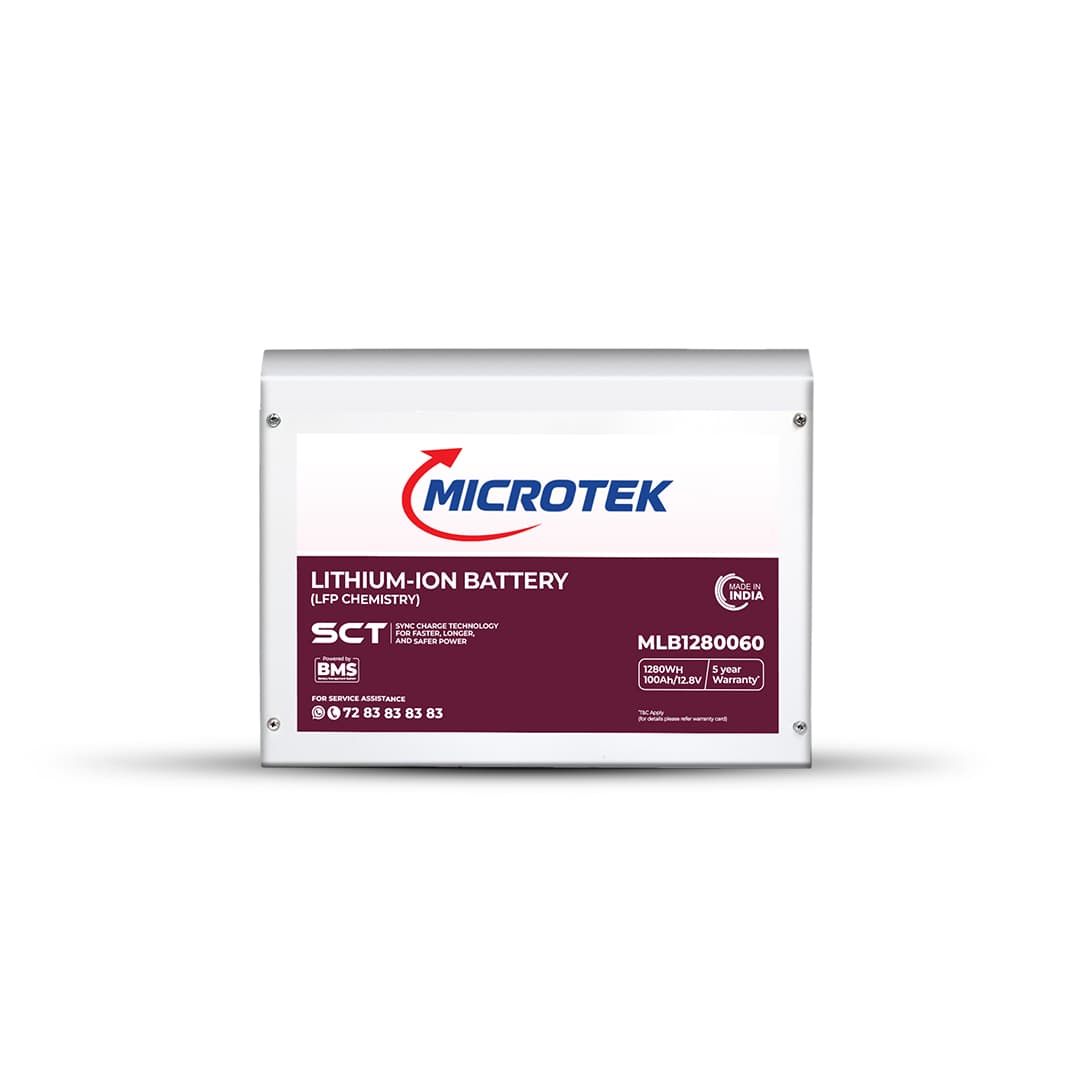
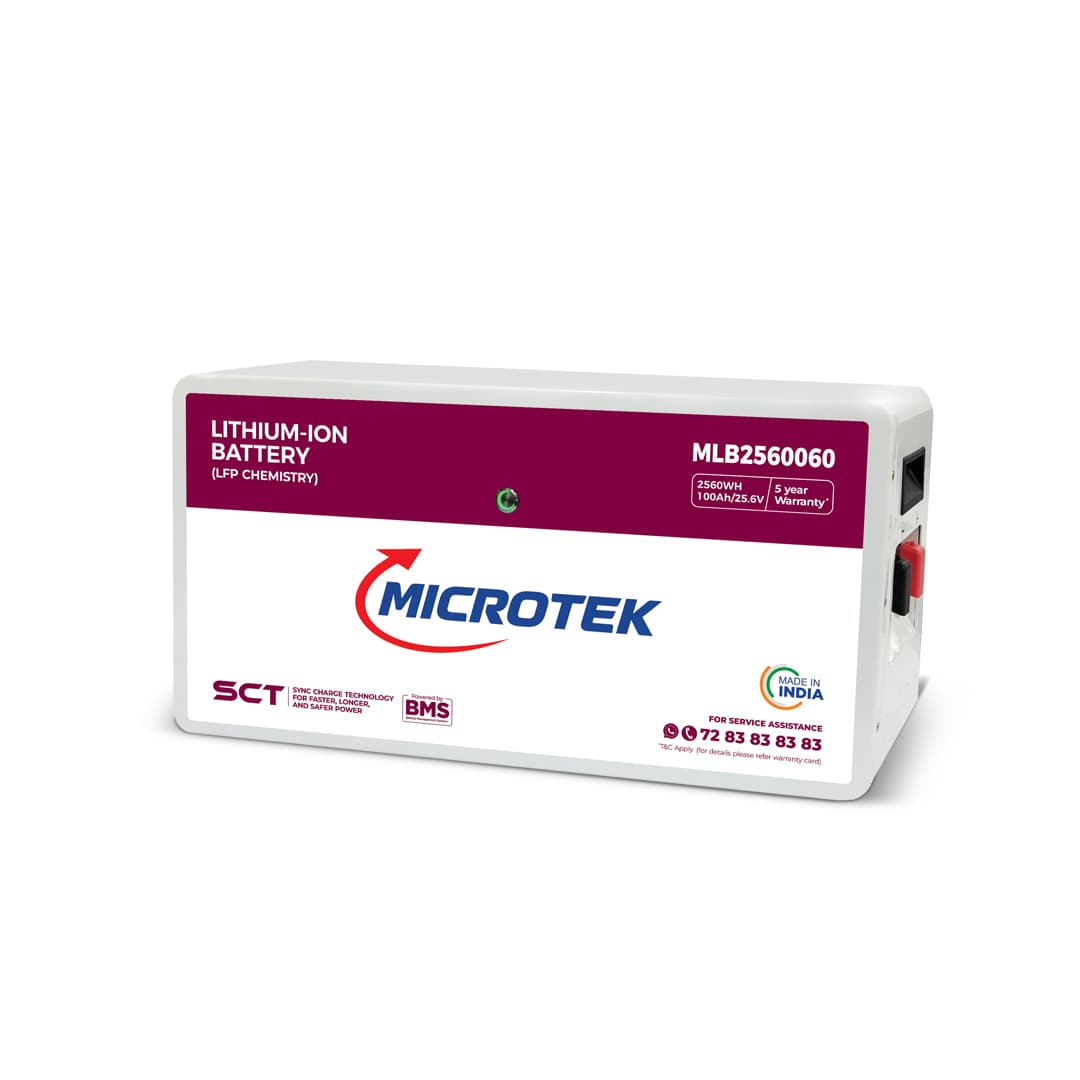
What LiFePO4 changes, and what it does not
Lithium iron phosphate packs change three things about living with a battery: there is no watering and no terminal corrosion to manage, they charge substantially faster, and they tolerate far more charge-discharge cycles than lead-acid. The packs in this range are rated for well over 3,000 cycles, against a few hundred deep cycles for a good tubular battery.
What they do not change is the physics of your load. A lithium pack does not make an undersized inverter run an air conditioner, and it does not extend runtime beyond the energy it stores. Compare on usable kWh, not on the word lithium.
Usable capacity is the honest comparison
A tubular battery is planned around roughly 60% depth of discharge to protect its life, so a nominal 150Ah 12V battery offers something closer to 1,080Wh in practice. LiFePO4 can be worked much deeper without the same penalty, so a far larger share of the nameplate figure is genuinely available to you.
That is why a lithium pack rated in kWh often outperforms a lead-acid bank of similar nameplate capacity, and why the comparison to make is usable watt-hours against usable watt-hours — not Ah against Ah, which quietly flatters lead-acid.
Inverter compatibility is the gating question
Lead-acid and LiFePO4 want different charging profiles. Some newer inverters are lithium-ready and can be set to the right profile; many older ones cannot, and running a lithium pack on a lead-acid charging curve is a good way to damage an expensive battery. This is the first thing to settle, before price.
If your existing inverter is not lithium-capable, the two honest options are a compatible inverter or an all-in-one wall-mounted unit with the pack built in, which sidesteps the matching problem entirely. Tell us your inverter model and we will confirm compatibility before you buy rather than after.
The cost case is per year, not per purchase
Lithium costs substantially more on day one and there is no way to argue around that. The case for it rests on cycle life and maintenance: if a pack lasts several times as many cycles as the lead-acid bank it replaces, needs no watering, and holds usable capacity better through its life, the cost per year can land below lead-acid even though the invoice is larger.
The case is strongest for daily deep cycling — long or frequent cuts, or a solar setup that discharges every evening. It is weakest for a home with short, occasional cuts and a tight budget, where a good tubular battery remains the rational buy. We will tell you honestly which of those you are.